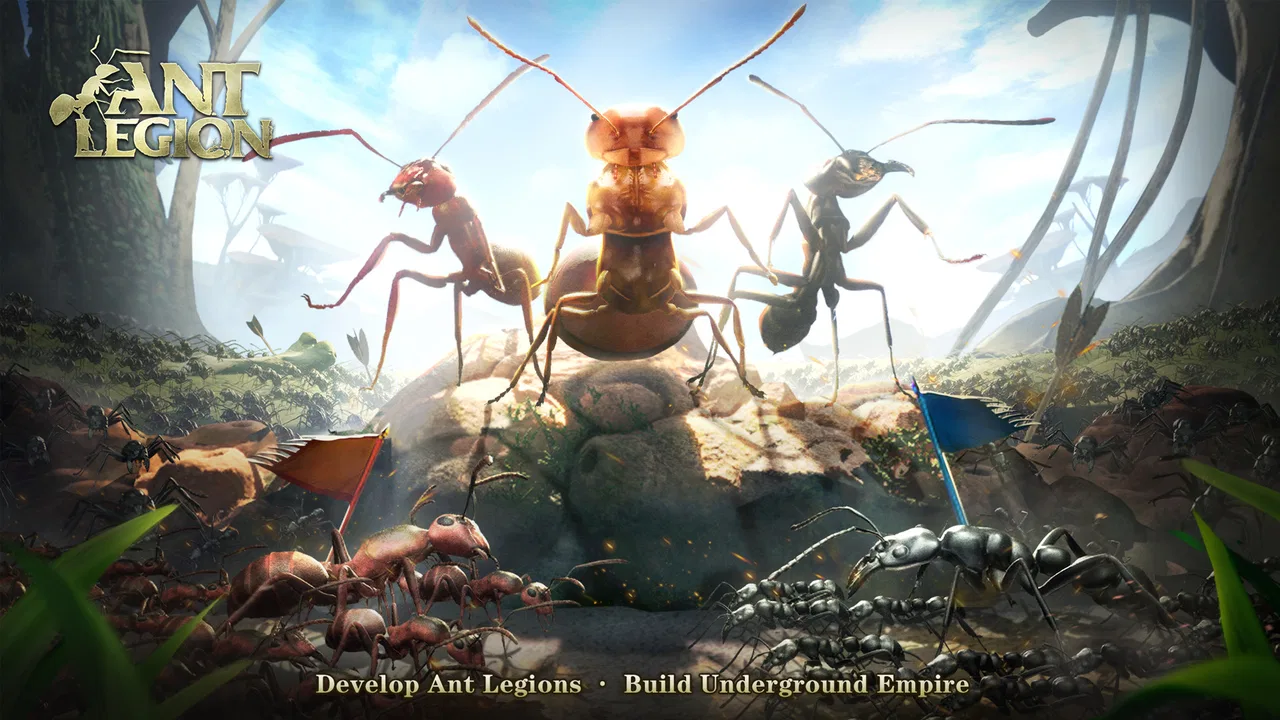
Ant Legion: For The Swarm
- 4.6
- Rating
- 10.00M
- Installs
- Free
- Price

 Analysis by App-foxy
Ant Legion: For The Swarm is the kind of strategy game I can open for a short check-in and then realize I have been planning my next move for much longer than expected. It places me in charge of an ant colony during a mutation-focused adventure, but the appeal is less about the theme alone and more about deciding what deserves attention first. Growth, preparation, exploration, and timing constantly compete for my limited focus.
Developed by 37GAMES, this free strategy game is rated Everyone 10+ and runs on Android devices using Android 7.0 or later. It has reached more than ten million installs, with an average rating of 4.6 from roughly 123 thousand ratings. Those figures suggest a large and active audience, but they do not tell you whether its style suits you. In my experience, the important question is whether you enjoy long-term progression and regular planning rather than quick, self-contained matches.
The game is available without an upfront purchase, while optional in-app purchases range from $0.99 to $199.99 per item. That wide range matters because the experience is built around ongoing development, not a single campaign that ends after a few evenings. I would recommend approaching it as a continuing hobby, with a personal spending limit decided before the colony becomes familiar and its upgrade choices start to feel urgent.
You May Also Like

 Blood Strike: 2.5 Anniversary
Blood Strike’s Loadouts Turn Every Drop Into a Tactical Gamble
A close look at Blood Strike’s custom loadouts: how fast access to signature weapons reshapes its battle royale rhythm, rewards preparation, and narrows the gap between fights.

 Pandora - Music & Podcasts
Pandora’s Music Is Easy to Start, but Harder to Recover
Pandora’s strength is its low-effort path from a seed to a station. Its weak spot is how much confidence it asks you to place in connection, setup, and quiet recovery.

 8 Ball Pool
 Is Built on Rivalries, Rematches, and Routine
A close look at the rivalries, rematches, shared routines, and unanswered safety questions that turn a quick pool match into a persistent mobile community.

 Samsung Music
’s Quiet Strength Is Playing What You Already Own
Its reach comes less from spectacle than from dependable access to a personal library. That simplicity is both the app’s strongest retention engine and its ceiling.

 AccuWeather: Weather Radar
AccuWeather Review: A Quick, Clear Forecast for Everyday Decisions
For everyday plans, the best forecast is the one you can understand quickly. AccuWeather makes rain timing, radar, and local conditions easy to act on, with a few trade-offs.

 Hill Climb Racing
Why Hill Climb Racing Still Turns Crashes Into One More Run
A tiny car, a bumpy hill and one more upgrade: Hill Climb Racing keeps resurfacing because its simple chaos makes every near-miss feel personal.
More From Our News Desk



How the colony turns small choices into a larger plan
I use this section to look at how individual colony decisions connect, so a choice that seems minor now can shape what becomes possible later. I also find it helpful to separate a useful long-term plan from simply upgrading whatever is currently available. That distinction sets up the question of which priorities matter most as the colony develops.
Every upgrade competes with another useful goal
The central decision space comes from deciding what kind of progress I want right now. A stronger colony may help with immediate challenges, while a different investment may prepare me for later demands. That creates a useful tension: the most attractive button is not always the most sensible choice. I have to think beyond the next reward and ask whether an upgrade improves my position generally or only solves one temporary problem.
This is where the ant setting works particularly well. A colony naturally suggests cooperation, specialization, and careful use of resources. I do not approach progress as though one powerful unit can solve everything. Instead, I think about how separate improvements support one another. When I spend too freely on a single area, I can leave another part of the colony lagging behind, which makes the whole operation feel less stable.
My practical advice is to pause before accepting every available improvement. Look at the next obstacle, identify what is actually holding you back, and then spend toward that bottleneck. If development is slow because the colony lacks a required resource, strengthening something unrelated may look productive while changing very little. That habit of checking the real constraint is more valuable here than simply choosing the largest visible number.
The game also suits players who like having several decisions open at once. I can move between development, preparation, and the broader adventure rather than following one perfectly linear path. That freedom is enjoyable, but it can also make the interface feel busy. New players may initially wonder which task deserves priority, especially when several activities offer immediate rewards.
Planning horizons make the difference
I found it useful to separate decisions into three horizons. The first is what helps during the current session. The second is what makes the next few sessions smoother. The third is what protects the colony from becoming dependent on one narrow approach. Thinking this way prevents me from spending everything on short-term convenience.
For example, if I know I will only have a few minutes, I focus on collecting available rewards and starting progress that can continue while I am away. During a longer session, I review the colony’s overall direction instead of clicking through tasks automatically. That distinction turns brief visits into useful maintenance rather than making every session feel like a rushed attempt to complete everything.
The strongest habit is to plan around bottlenecks, not around the most attractive reward. A reward is valuable only when it supports the next meaningful step. This is a small change in mindset, but it makes the game less overwhelming and reduces wasteful decisions.
Why the mutation theme adds more than decoration
The mutation-adventure premise gives the game a distinctive identity among strategy titles. It encourages me to think about change and adaptation rather than treating the colony as a fixed machine. Even when the underlying activity is familiar—improving, preparing, and pushing forward—the ant-world framing makes those choices feel more connected to a living group.
I would not choose this game solely for a deep simulation of real ant biology. Its value is in using that setting to make progression and specialization easier to understand. Players who enjoy insects, unusual fantasy worlds, or the idea of building strength through a collective may find the theme more memorable than the usual kingdoms and armies found in mobile strategy games.
Risk is often about timing rather than courage
The most interesting rewards are not always the ones I can claim immediately. Moving ahead before the colony is ready may produce faster progress, but it can also expose weaknesses that would have been easier to fix earlier. Waiting has a cost too: I may lose momentum or delay access to better opportunities. The game therefore rewards judgment rather than constant aggression.
I try to distinguish between a risk that expands my options and a risk that merely creates another problem. A forward move is worthwhile when it teaches me something, unlocks a useful route, or tests a prepared part of the colony. It is less attractive when I am acting only because the reward is visible and immediate. This approach keeps the adventure from becoming a sequence of impulsive choices.
That trade-off is especially important for players who expect strategy games to reward rapid action. Here, patience can be an active decision. Preparing first is not the same as doing nothing; it is a way of converting future uncertainty into a more manageable challenge.
Free entry does not mean friction-free progress
Because the game is free to start, it is easy to try without committing money. That is a genuine advantage for curious players. I can learn whether the colony-building rhythm suits me before paying anything. At the same time, optional purchases can make the temptation to accelerate progress part of the experience, particularly when I have already invested time in a development path.
The purchase range is broad, from small items costing $0.99 to individual items priced as high as $199.99. I would be cautious if you dislike games that place convenience or acceleration near long-term progression. The best way to keep the experience comfortable is to decide in advance whether you will spend, and under what circumstances. Treating purchases as a budgeted choice rather than an emotional response to a delay makes the free-to-play structure easier to manage.
Players who want a completely self-contained strategy game with no ongoing purchase pressure may prefer a premium title instead. Those games usually offer a clearer endpoint and a more controlled pace. Ant Legion is better suited to someone who enjoys returning to a developing world and accepts that its economy is part of the design.
Adaptation begins with noticing what stopped working
A common mistake is to keep repeating a plan simply because it worked earlier. In this game, I get better results when I treat failure or slow progress as information. If a familiar approach no longer produces the same benefit, I look for the neglected part of the colony rather than immediately forcing the same upgrade again.
This creates a useful form of adaptation. I may begin with a broad development plan, then change direction when a new obstacle exposes a weakness. The important point is not to abandon a strategy at the first inconvenience. Instead, I ask whether the problem is temporary, whether I chose the wrong priority, or whether the colony needs a supporting improvement before the original plan becomes effective again.
That process is more satisfying than simply following a recommended build. It gives me ownership of the colony’s identity. Two players can pursue progress with different priorities, and each can learn from the consequences. The game is at its best when it encourages that personal adjustment rather than making every choice feel predetermined.
How I handle a busy everyday schedule
A realistic use case is a player who checks in before work, during a lunch break, and again in the evening. I would use the morning visit to collect completed progress and begin the next practical task, not to make complicated decisions while distracted. At lunch, I would inspect whether the colony is waiting on one resource or one upgrade. In the evening, I would spend more time reviewing the larger plan and deciding what deserves attention next.
This routine works because it gives each visit a purpose. It also prevents the game from taking over every spare minute. If I only have a short break, I do not try to complete every available activity. I make one useful adjustment and leave. That makes the ongoing structure feel like a flexible hobby rather than another obligation.
On the other hand, players who prefer games that can be fully enjoyed offline in a single uninterrupted session may find this rhythm less satisfying. The colony is designed around continued development, so its strongest moments come from seeing a plan mature over repeated visits.
Depth comes from revisiting decisions, not from endless complexity
The game’s long-term depth is easiest to appreciate after the initial novelty fades. Early progress can feel straightforward because almost every improvement is helpful. Later, the question changes from “What can I upgrade?” to “Which improvement gives my colony the best position?” That shift is where planning becomes more meaningful.
I like that the game can support different levels of attention. A casual player can focus on visible progress and enjoy the mutation adventure at a relaxed pace. A more committed player can examine opportunity costs, prepare before pushing forward, and adjust priorities when development stalls. The same colony can therefore serve as a light daily game or a more involved strategy project, depending on how deeply I choose to engage.
There is a trade-off here. Long-term progression can make the early stages feel repetitive for players who want constant novelty. It can also make mistakes feel more expensive because a poor priority may take time to correct. I would not call that a flaw for the intended audience, but it is a clear reason to skip the game if you prefer rapid rounds, immediate resets, or a campaign with a definite finish.
Comparing it with other mobile strategy choices
Compared with quick competitive strategy games, Ant Legion places more emphasis on the continuing life of the colony. I am not only trying to win one short encounter; I am shaping a longer development path. That makes it a better choice for players who enjoy checking progress over time and making gradual improvements.
Compared with a traditional premium strategy game, it offers a more accessible entry point because I can begin for free and return whenever I want. The cost is a less controlled progression model and the presence of optional purchases. A premium alternative may be preferable when I want all systems available through one purchase and a clearly bounded experience.
Compared with idle-focused games, this one gives my decisions more weight than simply collecting and waiting. I still benefit from regular check-ins, but I get more satisfaction when I actively decide what to improve and when to take a risk. If you want almost no interaction, a simpler idle game may be more comfortable. If you want a colony theme with room for planning, this is the stronger fit.
Who should play, and who should pass
I recommend this game to players who enjoy strategy with a persistent sense of growth, unusual settings, and decisions that become more valuable over time. It is particularly suitable for people who like building a plan, checking whether it works, and changing it without needing every session to end in a dramatic victory.
I would be more hesitant to recommend it to someone who dislikes waiting for progression, feels uncomfortable around free-to-play purchase prompts, or wants a game that can be mastered in a weekend. The ant theme may also be a poor match if you want a conventional heroic adventure rather than a colony-centered experience.
The age rating of Everyone 10+ makes it accessible to a broad audience, but younger players may still need guidance around optional purchases. That is less about the game’s theme and more about the fact that its purchase options cover a particularly wide range. Families should discuss spending expectations before handing over access to the store account.
Small habits that improve the experience
When progress slows, identify the exact requirement blocking the next step before spending resources elsewhere.
Use short sessions for maintenance and longer sessions for strategic review, so you do not make rushed decisions during a busy day.
Keep a broad development plan instead of concentrating every improvement in one area, because a strong-looking colony can still be held back by a neglected support need.
Before taking a risky step, ask what you gain if it works and what information you learn if it fails. If the answer is neither, waiting is probably wiser.
Set a purchase boundary before you become invested in a long progression path. This keeps optional spending deliberate rather than reactive.
These habits are not complicated, but they change how the game feels. They reduce the sense of being pulled from one reward to another and make the colony’s direction feel chosen. I also find that they help reveal whether the game’s pace is genuinely enjoyable for me or whether I am only continuing because I have already spent time on it.
Version and device considerations
The current version is 7.1.187, and the game supports Android 7.0 and later. That makes it available to many Android users, including people who are not using the newest hardware. Even so, I would still consider the age and general condition of a device before committing to a long-running strategy game. A persistent title is more enjoyable when loading, touch response, and notifications do not become regular sources of irritation.
On iOS or Android, the most important practical question is whether you are comfortable with a game that expects repeated visits. The appeal is not limited to one platform-specific feature; it comes from the colony’s ongoing structure and the way small decisions accumulate. If you enjoy that pattern, the supported Android requirement is reassuring. If you want a game that asks for attention only once a week, the format may feel too demanding.
My strategy verdict after living with the colony
Ant Legion: For The Swarm succeeds because it makes gradual development feel like a series of meaningful trade-offs rather than a simple checklist. The ant setting gives the experience personality, while the long-term structure rewards players who think about timing, bottlenecks, and adaptation. I especially appreciate that the game can be approached casually without removing the possibility of deeper planning.
It is not the right recommendation for everyone. The free-to-play model, optional purchases, ongoing progression, and occasional need for patience will frustrate players who want a compact, fully controlled strategy experience. I also would not suggest it to someone who prefers fast matches or a fixed campaign over a colony that keeps asking for attention.
For me, the best way to play is to treat each visit as part of a larger plan. Collect what is ready, check what is blocking progress, make one or two deliberate choices, and resist spending simply because an immediate shortcut is available. With that mindset, the game becomes more than an ant-themed progression loop. It becomes a patient strategy hobby where the most satisfying reward is seeing a carefully managed colony become capable of handling problems that once seemed out of reach.
My final recommendation is therefore positive, with conditions. If you want a free strategy game built around persistent colony growth and you enjoy making decisions across several time horizons, this is worth trying. If you need instant action, a clean endpoint, or no purchase pressure at all, choose a different kind of strategy game. For the right player, though, 37GAMES has created a distinctive setting in which thoughtful preparation matters just as much as bold expansion.
FAQs for Ant Legion: For The Swarm
01What is the main objective of Ant Legion: For The Swarm?
Ant Legion: For The Swarm is a strategy game where players build and manage an ant colony. The primary goal is to expand your colony, gather resources, and defend against predators. Players must strategize to ensure their ants thrive in a competitive environment by exploring, fighting, and collaborating with other colonies.
02Is Ant Legion: For The Swarm free to play?
Yes, Ant Legion: For The Swarm is free to download and play. However, it offers in-app purchases that can enhance gameplay, such as buying resources or upgrading your ants more quickly. Players can still enjoy the game fully without spending money, although progress might be slower.
03What are the system requirements for Ant Legion: For The Swarm?
Ant Legion: For The Swarm requires iOS 10.0 or later for Apple devices and Android 5.0 and up for Android devices. The game performs best on devices with at least 2GB of RAM. Ensuring your device meets these specifications will provide a smoother gaming experience.
04Can I play Ant Legion: For The Swarm offline?
Ant Legion: For The Swarm requires an internet connection to play. This is because the game features online interactions, such as alliances and competitive matches, which need a stable connection. Offline play is not supported, so players should ensure they have internet access when playing.
05Are there any community features in Ant Legion: For The Swarm?
Yes, Ant Legion: For The Swarm includes several community features where players can form alliances with others. This allows for cooperative gameplay, strategy sharing, and engaging in large-scale battles. The game encourages social interaction, which enhances the overall experience by fostering a sense of community.
Pros
- Engaging strategy elements keep players hooked.
- Vibrant graphics enhance the gaming experience.
- Variety of ant species to unlock and explore.
- Regular updates with new challenges and events.
- User-friendly interface for smooth navigation.
Cons
- In-app purchases can be quite expensive.
- Requires constant internet connection.
- Battery drain on prolonged play sessions.
- Occasional bugs disrupt gameplay.
- Limited offline features for casual play.

Ant Legion: For The Swarm
Gallery